


When the fingers hurt, a person experiences restrictions in movement, therefore, life becomes incomplete.Medical statistics show that such problems often bother older people.For example, in women, hormone levels change, which causes a very unpleasant sensation in the fingers.But there are some diseases that can cause pain in the fingers even at a younger age.
1. Rheumatoid arthritis
The cause of pain in the fingers is associated with rheumatoid arthritis, inflammation of the joints.The body's defense system affects the connective tissue, resulting in damage to the cartilage.This disease changes the shape of the fingers, spoils a person's well-being and causes unpleasant pain.
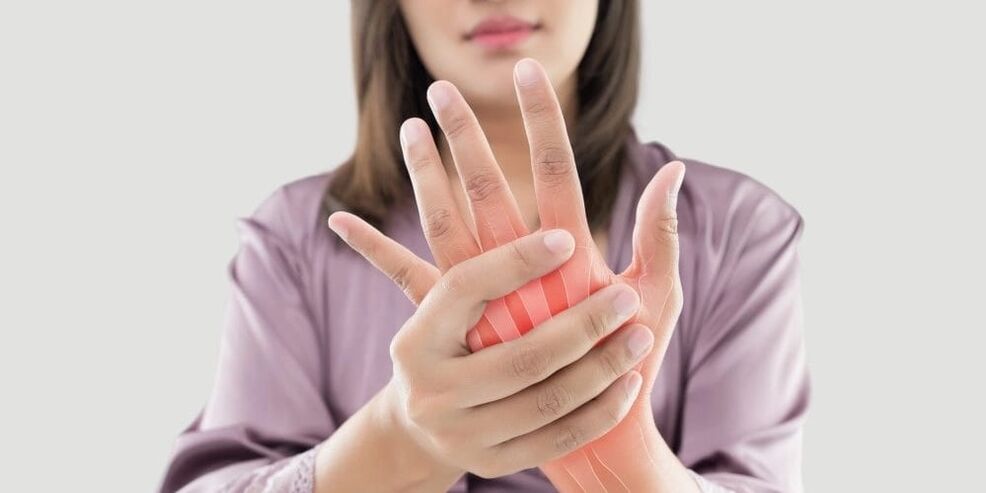
Rheumatoid arthritis is divided into three stages.The first stage appears gradually.The pain is not constant, but causes discomfort to the person.The second stage is caused by almost constant pain in the fingers.If treatment is not started, the disease will enter the third stage, which will lead to cartilage breakdown, tissue abrasion and joint destruction.
Currently, scientists cannot determine the exact cause of rheumatoid arthritis.They only know how the body reacts to the inflammatory process.But there are several factors that complicate and lead to this disease.:
- Bad environment;
- Genetic predisposition;
- Decreased immune system;
- Viral and infectious diseases;
- Hormonal disorders;
- Constant pressure;
- All types of finger injuries.
Signs of illness
The initial sign of this disease can be considered as pain in the joint of the middle finger or index finger, because in it the inflammation originates.Unfortunately, if painful sensations appear on one hand, they will immediately appear on the other hand.The swelling does not go away for a long time, and the pain becomes acute, especially after sleeping.
Some patients often compare this pain in the finger with a toothache, because the sensation becomes stronger every day.
Among the observed symptoms are:
- Redness of the skin of the fingers;
- Sometimes fever;
- Insufficient sleep;
- Reduce appetite;
- Fatigue;
- Brush distortion.
Rheumatoid arthritis must be treated, so at the first sign it is recommended to go to the hospital and consult a doctor.
Treatment options
Pain in the fingers can be treated using both drugs and traditional methods.
Doctors prescribe drugs that slow down the inflammatory process and drugs that reduce the pain syndrome.The complex also includes various ointments, compresses and hirudotherapy.
Folk methods include using:
- raw potatoes;
- pumpkin;
- honey;
- Burdock;
- White cabbage;
- Rosehip;
- Conifer branches and more.
The main thing is to use all these in the right proportions and recipes.
Proper nutrition will have a positive effect on rheumatoid arthritis.Patients are advised to exclude fatty, sweet and starchy products from the diet.
2. Osteoarthritis
If the finger joints are swollen and painful, the doctor determines that the person has osteoarthritis.Cartilage tissue is destroyed, affecting joints and periarticular tissue, resulting in osteoarthritis, which is a common disease affecting the fingers.
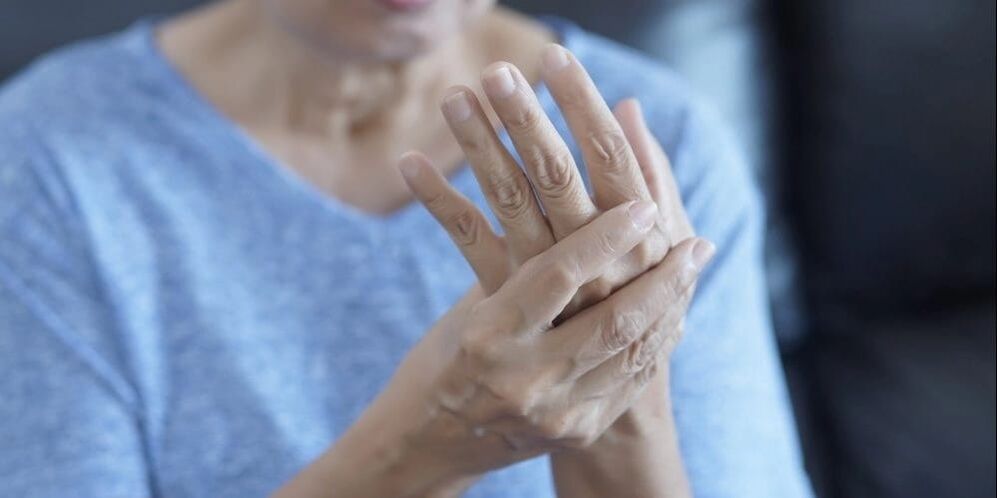
This disease is diagnosed in people over 40 years old.Women are more likely to develop osteoarthritis than men.According to statistics, this pathology is a hereditary disease.But people whose work involves small, tedious hand and finger movements are at risk.
Osteoarthritis may not manifest for a long time, which is why doctors find patients whose disease is already at an advanced stage.
Among the causes of problems with fingers, the following factors stand out::
- Age;
- Hormonal imbalance;
- Infections and bacteria;
- Hereditary pathology;
- Regular exercise on the arms;
- All types of injuries.
Osteoarthritis is also divided into two forms - nodular and rhizarthrosis.
Signs of illness
The first stage of osteoarthritis is manifested by muscle spasms, night pain in the fingers and slightly visible swelling.In the next stage, pain occurs when bending the fingers, strange dryness that cannot be compared to normal dryness, and enlargement of the affected limb.In the third stage, the pain is constant, the person cannot fully move his fingers, feels numb.In the end, the phalanx becomes deformed.
If treatment is not started immediately, osteoarthritis will lead to disability or complete loss of independent function.
Treatment options
To diagnose osteoarthritis, the doctor only needs to perform an X-ray examination, which will immediately show the presence of the disease or the stage of its development.
Used to treat diseases:
- Drugs that kill inflammation;
- Painkillers;
- Hyaluronic acid;
- Various ointments and creams;
- laser therapy;
- Magnetotherapy;
- Therapeutic gymnastics;
- Massage;
- Traditional medicine.
Experts recommend following an orthopedic regimen if the disease is caused by excessive stress.You should avoid sports or professional activities that cause complications to your fingers.
3. Stenosing ligamentitis
If a person's fingers are painful and numb, this indicates stenotic ligamentitis.This disease is also called broken finger disease or Knott's disease.Ligamentitis is caused by cicatricial changes in the ligaments, which occur as a result of monotonous movement.
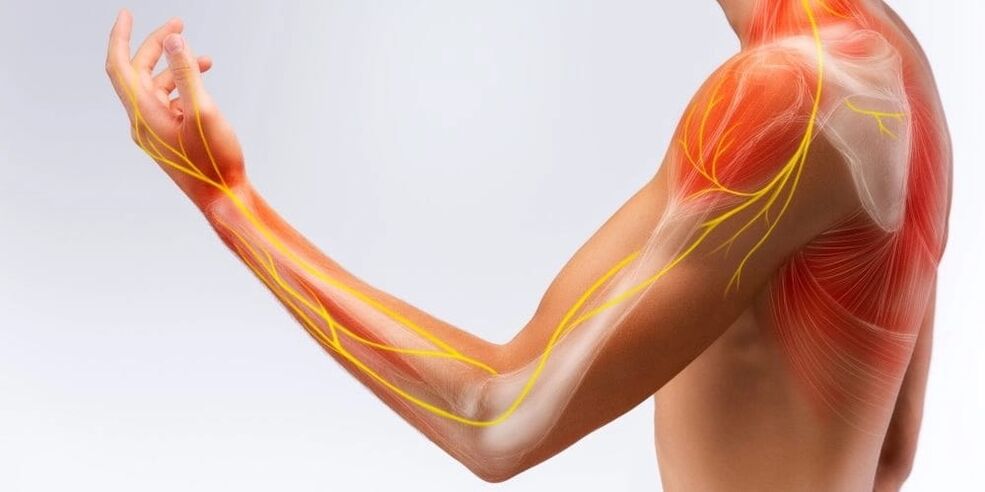
Problems such as fingers and toes can occur not only in adults, but also in small children.Often the thumb and ring finger are affected.
Among the causes of pain in the fingers, experts identify:
- Excessive load;
- Professional activities related to tedious finger movements;
- Inflammatory process;
- Genetic predisposition;
- Incorrect structure of ligaments, tissues, tendons;
- Diabetes mellitus;
- Atherosclerosis;
- Problems with the thyroid gland.
Signs of illness
This disease has the following symptoms:
- When a person bends or straightens their fingers, they start clicking.Morning is the most difficult and painful period;
- Pressing on the palm brings sharp pain;
- Pain may affect the hand and radiate to the shoulder;
- Insufficient finger function.
Stenosing ligamentitis, which causes significant pain in the fingers, has three stages of development:
- The initial stage is indicated by small pains on the finger pads and clicks;
- In the second stage, a person cannot straighten his fingers without significant effort;
- In the final stage, the painful fingers are completely bent.Only surgical intervention can restore it to its original position.
This disease has serious consequences, so if your finger pad hurts, you should immediately go to the hospital for a consultation.
Treatment options
To treat stenosing ligamentitis, experts use:
- Nonsteroidal drugs that eliminate inflammation;
- Corticosteroid blockade;
- Manual therapy;
- Osteopathy;
- Reflexology;
- Phonophoresis;
- Therapeutic gymnastics.
After the diagnosis, the doctor develops a personalized therapeutic course for each patient.
4. Gout
Gout can cause pain in the fingers.This disease is caused by the accumulation of crystalline material in the joints, which causes bone growth.Fingers or toes are at risk.Bony growths can form on one finger or on several phalanges.
Unfortunately, women suffer from gout more often.For men, this disease occurs only after 40 years.
This disease causes pain in the fingers, limits movement, reduces the ability to work, and forces a person to give up his favorite occupation.
Among the causes of gout in the fingers, scientists identified:
- Hereditary tendencies;
- Overweight;
- High blood pressure;
- Diabetes mellitus;
- Regular use of strong coffee;
- A large amount of alcohol in the blood;
- Snacks;
- Kidney problems.
Symptoms of gout
The characteristic symptoms of the disease are:
- Sharp, paroxysmal pain in the fingers;
- Increased local temperature;
- Swollen joints;
- Malaise;
- Nodes that are clearly visible under the skin of the fingers.
A gout attack can take months or years to develop.And in between, one does not feel the problem with the bones.Therefore, experts recommend that at the first incomprehensible sign, for example, the joint in the finger hurts, you should immediately visit the hospital.
Treatment options
The achievement of successful pain treatment results lies in an integrated approach:
- Drug therapy;
- Gel, cream, ointment;
- Massage;
- Therapeutic gymnastics;
- People's recovery.
An important part of treatment is diet, which includes:
- Rejection of fish and fatty meat;
- Stay away from smoked, salty and canned food;
- Drink coffee and tea in limited quantities;
- Avoid smoking and drinking alcoholic beverages;
- Drink the prescribed amount of liquid;
- Boiling or steaming food;
- The presence of dairy products in the diet.
The use of folk remedies should be discussed with your doctor.
5. Psoriatic arthritis
When a person experiences swelling of the fingers, the cause may be psoriatic arthritis.This disease occurs as an independent disease or accompanying form of psoriasis, which is inflammation of the joints.
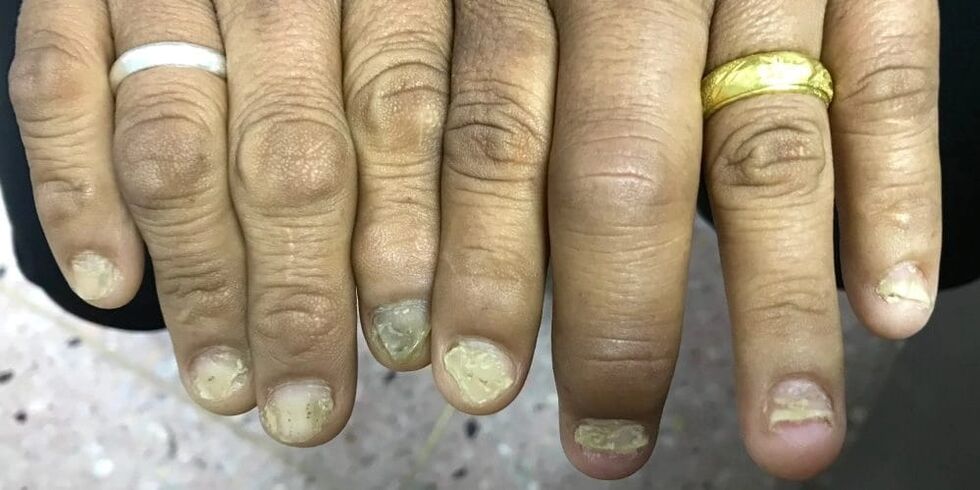
Pathology develops not only in the fingers, but also in other joints.This type of inflammation leads to disability and requires regular therapy.
Often, psoriatic arthritis runs in families.But experts have identified other factors that trigger this disease.:
- Infectious diseases;
- Frequent stressful situations;
- Bruises or injuries to limbs;
- Certain medications;
- The presence of a large amount of melanin in the blood;
- Heart disease.
Symptoms of psoriatic arthritis
The main symptoms of this disease are pain in the joints, causing significant discomfort.Accompanying symptoms include:
- Swelling of the problem area;
- Pain from touch;
- Redness or bluishness of the skin;
- Increased local temperature;
- In appearance, the fingers appear shortened;
- Elasticity is affected;
- Psoriasis often affects the nail plate.
When the disease acquires a malignant form, a person shows the following symptoms:
- Fever condition;
- Fatigue;
- Sudden weight loss;
- Severe limitation of movement;
- Enlarged lymph nodes.
Men are more susceptible to the malignant form of psoriatic arthritis.In addition to losing the ability to work, this disease can be fatal.
Until now, scientists have not found a way to cure psoriatic arthritis.You need to seek help from the hospital in time to prescribe the right course of treatment that will preserve your health and ability.
Treatment options
If a person suffers from psoriatic arthritis, he needs to undergo a course of treatment for the rest of his life.
- Medicines that relieve pain, inflammation and swelling;
- Corticosteroids for acute pain relief;
- Drugs that artificially suppress immunity;
- Vitamin complex;
- Psycholeptic;
- Various creams and ointments;
- Medicines that restore bone tissue;
- Magnetotherapy;
- Ultrasound treatment;
- Therapeutic gymnastics;
- Diet is a must.
In some cases, doctors use surgical intervention, so keep in mind that timely treatment is the key to functional health.
6. Infectious arthritis
When your fingers hurt when you bend them, the doctor can diagnose infectious arthritis, a complex problem with the joints.
Unfortunately, this disease can occur in adults and children, affecting one or more joints at the same time.
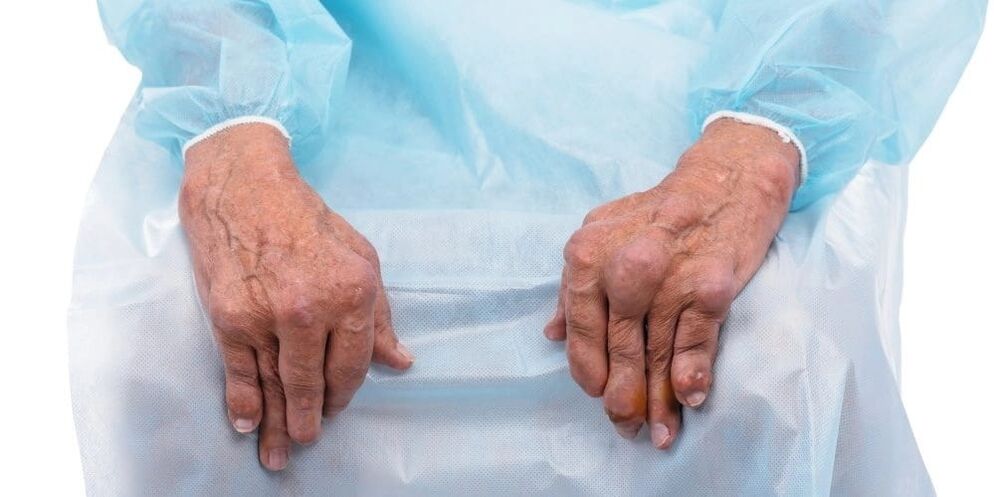
The cause of this disease is an infectious wound, virus or fungus, which, thanks to the blood flow, enters the joint.The disease is transmitted to newborns from infected mothers.
There are categories of people who are more prone to infectious arthritis.This is a patient with such a disease:
- Rheumatoid arthritis;
- oncological diseases;
- Venereal diseases;
- Diabetes mellitus;
- Anemia;
- Alcohol and drug addiction.
If infectious arthritis is not treated promptly, the disease can be fatal.
Signs of illness
The main symptom of this disease is pain in the fingers, which does not allow a person to live a full life.Subsequent symptoms include:
- Painful movement;
- finger swelling;
- Joint pain;
- Normal line modification;
- Problematic hand movements.
If a person feels pain when bending their fingers, they should immediately go to the doctor for diagnosis and treatment.
Treatment options
Therapy for infectious arthritis is carried out on an inpatient basis, as the patient must be under the strict supervision of a specialist.Treatment may last several weeks or months.It all depends on the stage of the disease.
To treat the disease, the doctor prescribes:
- Antibiotics;
- Anti-inflammatory drugs;
- Painkillers;
- Physiotherapy.
In severe cases, if antibiotic therapy does not bring results and the pain continues to worsen, specialists use surgery.
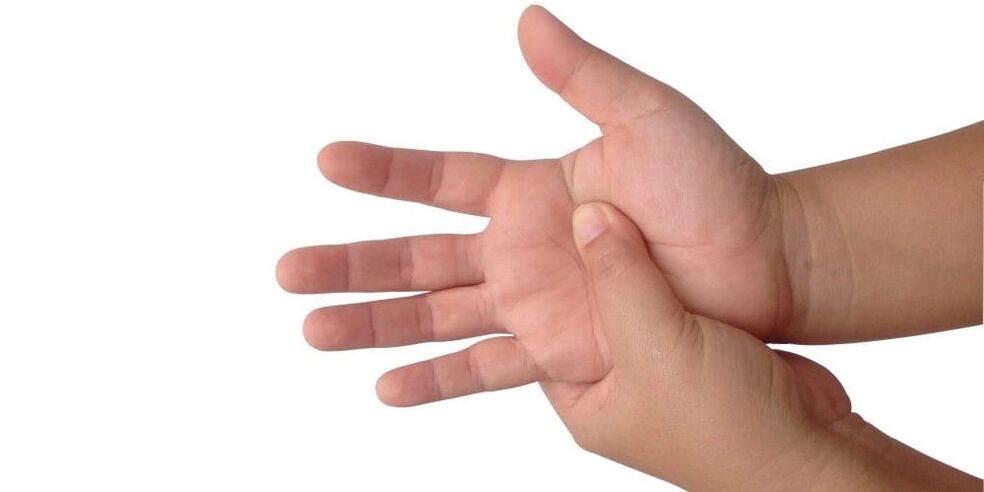
The doctor treats pain in the finger
When your finger joints hurt, you should contact the following specialists:
- Therapist;
- Rheumatology;
- Surgeon;
- Neuropathologist;
- Trauma specialist;
- Endocrinologist;
- Hematologist.
A less popular cause of pain in the fingers
There are some less popular reasons why fingers hurt, for example:
- Osteomyelitis;
- Bursitis;
- Peripheral angiospastic crisis;
- Polycythemia;
- De Quervain's disease;
- Tenosynovitis;
- Tunnel cider;
- Pregnancy;
- carpal tunnel syndrome;
- Rhysarthrosis;
- Raynaud's syndrome.
Summing up
When finger joints hurt, the causes and treatments are different.And to avoid various complications or surgical intervention, the disease must be treated at an early stage.Therefore, at the first painful symptoms, you should immediately go to the hospital.